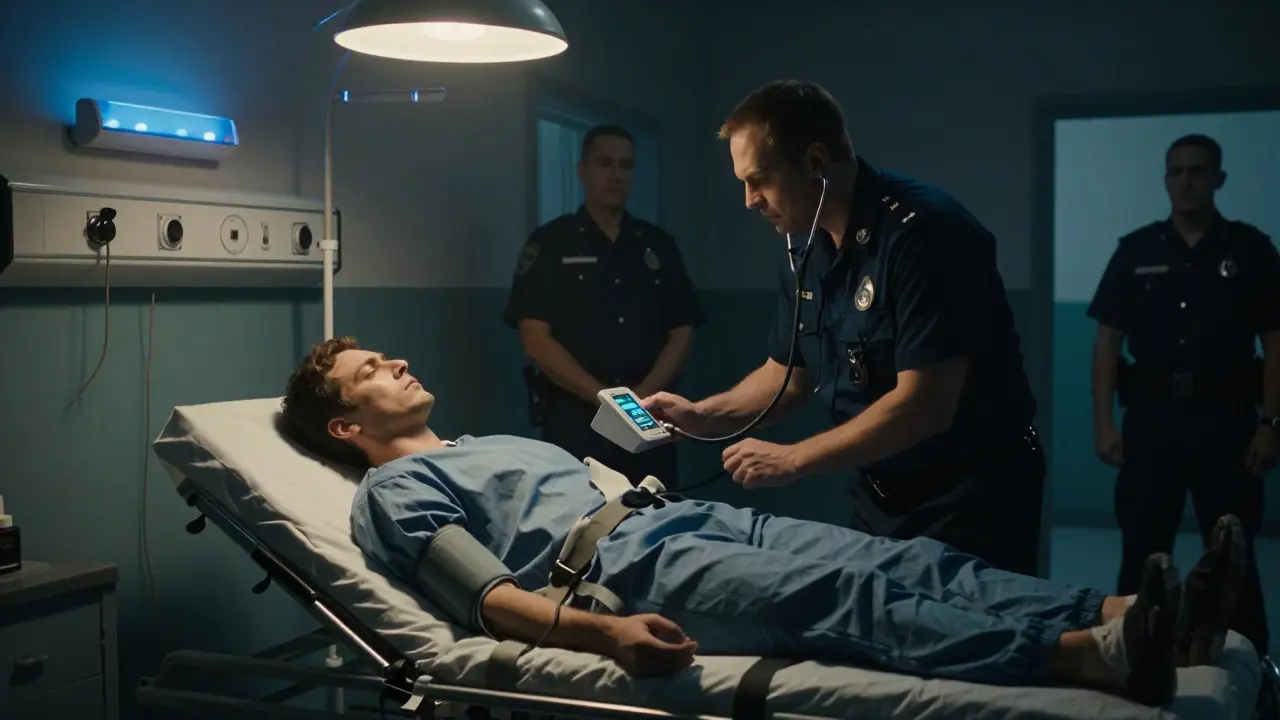
Imagine a prisoner in a rural facility having a heart attack at 3 AM. The nearest trauma center is forty miles away, but the local ambulance crew isn't trained to handle an armed guard team or secure restraints. This is where hospital transfer coordination becomes critical. It is not just about moving a body from Point A to Point B; it is a complex logistical puzzle involving medical stability, security risks, and legal compliance.
For correctional officers and prison administrators, the stakes are high. A delayed decision can turn a treatable condition into a fatal one. Conversely, overreacting can waste scarce medical resources and expose staff to unnecessary risk. Understanding the precise triggers for evacuation and the mechanics of safe transport separates competent management from liability nightmares.
Identifying the Medical Trigger
The first step in any transfer is determining if hospital care is actually required. Not every cough or minor injury warrants an ambulance ride. Correctional medical staff must distinguish between conditions that can be managed within the facility and those requiring external intervention.
Generally, three categories trigger a mandatory transfer:
- Life-threatening emergencies: Cardiac arrest, severe stroke symptoms, major trauma, or uncontrolled bleeding.
- Diagnostic needs: Conditions requiring imaging (CT/MRI) or labs not available on-site, such as persistent abdominal pain or suspected fractures.
- Specialized treatment: Surgical procedures, psychiatric stabilization beyond basic sedation, or chronic disease flare-ups like diabetic ketoacidosis.
The key attribute here is clinical instability. If a patient’s vital signs fluctuate despite on-site treatment, the threshold for transfer drops significantly. Documentation is crucial; the medical officer must clearly note why on-site care failed. This record protects both the patient’s rights and the facility from negligence claims later.
Security Assessment and Risk Stratification
Before the stretcher moves, the security team must assess the risk. Is the patient cooperative? Are they a flight risk? Do they have a history of violence during transport? These factors dictate the level of restraint and the type of vehicle used.
High-risk patients might require four-point restraints and two dedicated guards per side of the gurney. Low-risk patients may only need wrist restraints and a single escort. Misjudging this balance can lead to either excessive force complaints or escape attempts.
| Risk Level | Restraint Type | Guard-to-Patient Ratio | Vehicle Requirement |
|---|---|---|---|
| Low | Wrist restraints only | 1:1 | Standard van with bench seating |
| Moderate | Waist and wrist restraints | 2:1 | Stretcher-equipped van with rear compartment |
| High | Four-point bed restraints | 4:1 | Ambulance with locked rear bay |
Choosing the Right Transport Mode
Once the decision to move is made, selecting the right vehicle is the next hurdle. You generally have three options: standard police vans, dedicated correctional transports, and medical ambulances.
Standard Police Vans are cost-effective for short distances and stable patients. However, they lack medical equipment. If the patient needs oxygen monitoring or IV fluids, these vehicles become dangerous liabilities.
Dedicated Correctional Transports offer a middle ground. They have space for restraints and some basic medical supplies, but they often lack advanced life support capabilities. They are best for non-emergency transfers where the patient is stable but needs to see a specialist.
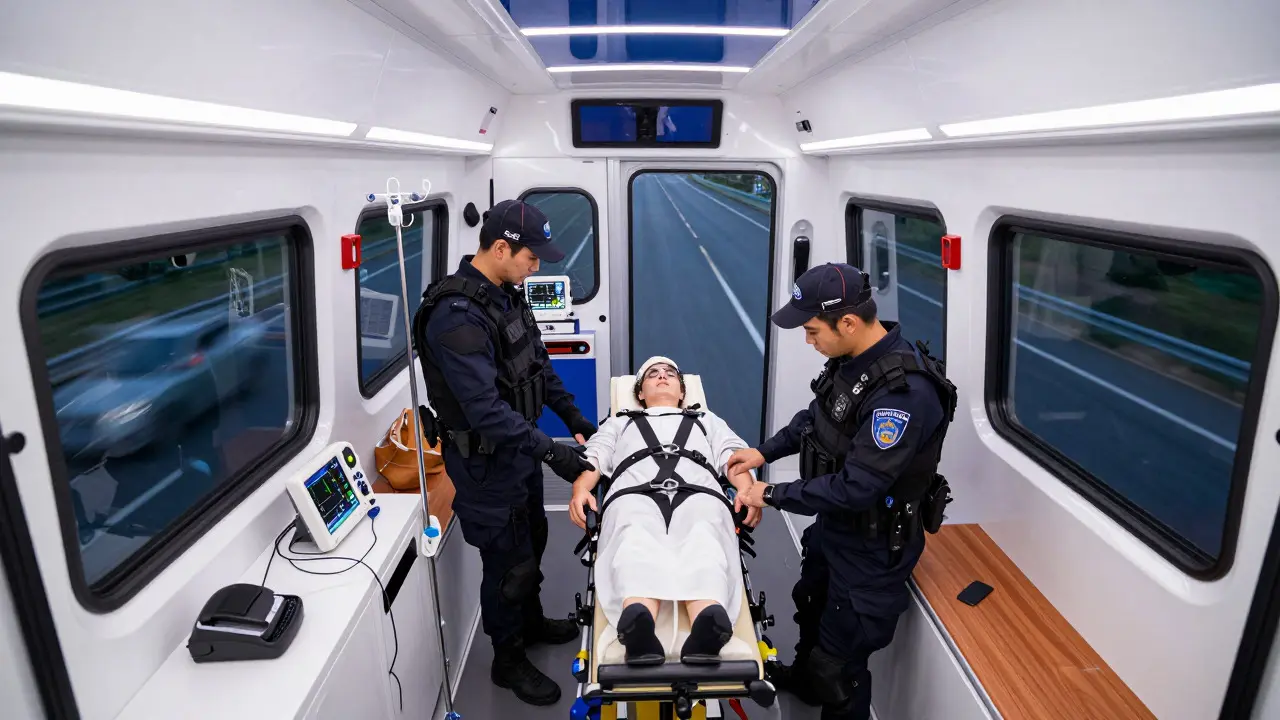
Medical Ambulances are the gold standard for emergencies. They provide continuous monitoring, medication administration, and resuscitation capability. The downside? Cost and complexity. Coordinating an ambulance requires pre-clearance from the receiving hospital and ensures that paramedics understand how to work around heavy-duty restraints.
A common mistake is using a police van for a patient who is clinically unstable because it's faster to dispatch. Always prioritize clinical stability over speed when choosing the vehicle type.
The Handoff Protocol: From Prison to Hospital
Transport is only half the battle. The handoff at the hospital ER is where many things go wrong. If the arriving guard doesn't have the patient's full medical history, medications, and legal status, the ER team wastes precious minutes asking questions instead of treating.
An effective handoff includes:
- Paperwork Package: A sealed envelope containing the incident report, current medication list, allergy history, and consent forms (if applicable).
- Verbal Briefing: A structured SBAR (Situation, Background, Assessment, Recommendation) summary given directly to the charge nurse or attending physician.
- Restraint Transfer Plan: Clear instructions on which restraints remain on the patient until admitted to a secure unit, and which should be removed for treatment.
Without this protocol, you risk medical errors due to missing information and security breaches if restraints are applied incorrectly by unfamiliar ER staff.

Common Pitfalls and How to Avoid Them
Even experienced teams make mistakes. Here are the most frequent issues and practical fixes:
- Delay in Dispatch: Waiting too long to call the ambulance because you're 'assessing.' Fix: Set a hard time limit (e.g., 5 minutes) for initial assessment before calling transport.
- Communication Gaps: Guards don't know what the paramedics are doing, or vice versa. Fix: Designate one point of contact (usually the senior guard) to relay all commands during transit.
- Inadequate Restraints: Using straps that dig into wounds or restrict breathing. Fix: Regularly inspect restraint fit during the ride, especially if the trip exceeds 30 minutes.
- Legal Non-Compliance: Forgetting to document the time of departure and arrival. Fix: Use a standardized checklist that requires timestamp entries at every phase.
Building a Resilient Transfer System
Coordinating these transfers isn't a one-off task; it's a system. Facilities that succeed do so by practicing regularly. Conduct tabletop exercises where staff walk through a mock cardiac arrest scenario. Test your radio channels with the local EMS agency. Verify that your restraints meet current safety standards.
When the system works, the process feels invisible. The patient gets care quickly, the guards stay safe, and the paperwork is clean. When it fails, everyone remembers exactly what went wrong. Your goal is to ensure that when the unexpected happens, your team relies on muscle memory, not panic.
How long does a typical prison to hospital transfer take?
It varies widely based on distance and traffic, but urban transfers typically take 15-30 minutes, while rural areas can exceed 60 minutes. The critical factor is not the total travel time, but the time spent preparing the patient and securing restraints before departure.
Who decides if a prisoner needs to be transferred to a hospital?
The decision rests with the on-site medical officer or doctor. While security guards can initiate the process if a patient appears unstable, the final clinical judgment belongs to the healthcare provider. In emergencies, the principle of 'treat first, ask later' applies to stabilize the patient immediately.
What happens if a prisoner escapes during transport?
This is a rare but catastrophic event. Immediate action involves locking the vehicle, alerting local law enforcement via radio, and securing the scene. Post-incident, a full review of restraint protocols and guard positioning is mandatory to prevent recurrence.
Do prisoners have the right to choose their hospital?
Generally, no. The choice is dictated by proximity, availability of specialized care, and security considerations. However, if a prisoner has a specific chronic condition requiring a particular specialist, facilities should attempt to coordinate with that preferred institution if feasible.
How should restraints be handled during medical treatment in the ambulance?
Restraints should be loosened or removed only when necessary for medical access (e.g., inserting an IV line). Once the procedure is done, they should be reapplied immediately unless the patient is fully conscious and cooperative. Never leave a restrained patient unattended.