
Most people think getting out of prison is the finish line. It’s not. For many, it’s just the starting gun for a different kind of race-one where your freedom depends on paperwork. If you’ve ever watched someone get sent back to jail for something as simple as losing a paystub or forgetting to log a doctor’s appointment, you know how fragile this system is. Parole compliance isn’t just about staying out of trouble; it’s about proving you’re doing what you said you’d do. And in today’s digital-first world, "I did it" doesn’t count unless you have the receipts.
This guide breaks down exactly what your parole agent needs to see, why they need it, and how to keep your records so clean that even the most skeptical supervisor can’t find a hole in them. We’re talking about the nitty-gritty: logs, paystubs, and the specific types of proof that keep you on the street instead of behind bars.
The Golden Rule: If It Isn’t Documented, It Didn’t Happen
Here’s the harsh reality of probation and parole supervision: agents are overworked. In Portland, Oregon, caseloads can be heavy, meaning an officer might supervise dozens of individuals at once. They don’t have time to chase you down for missing info. If you miss a check-in or fail to submit a document by the deadline, it gets flagged. A flag leads to a violation report. A violation report leads to a hearing. You get the picture.
Your job is to make their job easy. When you hand over a neat stack of documents-or upload them correctly to the state’s portal-you signal reliability. This builds trust. Trust buys you flexibility. If you want to change jobs, move apartments, or take a vacation, having a spotless paper trail makes approval much more likely.
Paying Your Dues: The Art of Financial Documentation
For most parolees, the two biggest financial obligations are restitution/fines and child support (if applicable). But beyond paying, you must prove you paid. Let’s look at the three main pillars of financial proof.
Paystubs and Employment Verification
If you’re employed, your paystub is your lifeline. It proves income, which proves stability. But not all paystubs are created equal. Some employers provide bare-bones slips that lack key details. Your agent needs to see:
- Gross and Net Income: To verify you can afford living expenses and court fees.
- Deductions: Specifically looking for wage garnishments for restitution or child support.
- Employer Details: Name, address, and sometimes a contact number.
If you’re paid in cash, good luck. Cash payments are hard to track. If you work under the table, you risk being accused of unemployment if you can’t produce a ledger. A better strategy? Ask your employer for a formal letter on company letterhead stating your hourly rate, average hours worked, and total earnings for the month. Have them sign and date it. Keep a copy for yourself, email a PDF to your agent, and bring the original to your next meeting.
Receipts for Restitution and Fees
Court-ordered restitution often goes directly to victims or through a clerk’s office. Never assume the clerk has your payment recorded immediately. There is often a lag between when you hand over cash/check and when it hits the official record. Always get a stamped receipt. If you pay online via a portal like Oregon’s OJC (Oregon Judicial Department) system, save the confirmation email and screenshot the transaction ID. Do not rely on your bank statement alone; it shows money left your account, but it doesn’t explicitly say "Restitution Payment for Case #12345." Specificity saves lives.
Budget Logs for Unemployed Individuals
If you aren’t working yet, you still need to show movement. Create a simple spreadsheet tracking every dollar coming in (family help, gig work) and going out (food, bus fare, phone bill). This demonstrates fiscal responsibility. It shows your agent you aren’t squandering resources while waiting for a job lead.
Staying Clean: Drug Testing and Treatment Logs
Substance abuse conditions are among the most common reasons for parole revocation. Whether you’re in a court-mandated treatment program or subject to random drug screens, documentation is critical.
| Documentation Type | Who Issues It | What It Proves | Frequency |
|---|---|---|---|
| Urine Screen Result | Lab/Clinic | Negative result for specified substances | Random or Scheduled |
| Treatment Attendance Log | Counselor/Program Manager | Active participation in therapy groups | Weekly/Monthly |
| Prescription Verification | Pharmacy/Doctor | Legitimate use of controlled meds (e.g., methadone) | Monthly |
| Sobriety Milestone Cert | Support Group (AA/NA) | Commitment to recovery community | As earned |
A major pitfall here is the "false positive." Did you eat poppy seed bagels before a test? Did you take cold medicine with pseudoephedrine? If you test positive unexpectedly, don’t just panic. Immediately request a split-sample re-test (GC/MS testing) if available. Also, document everything you consumed in the 48 hours prior to the test. Having a written log of your diet and medications can explain anomalies faster than verbal excuses.
If you’re in outpatient treatment, keep your own tally sheet alongside the clinic’s. Sometimes clinics forget to send monthly summaries. If you show up with your own signed attendance log showing you attended 100% of sessions, you protect yourself from claims of non-compliance due to administrative errors.
Living Stable: Housing and Address Verification
You cannot violate your parole by moving without permission. But proving your residence is stable requires more than just saying "I live at my mom's house." You need a Residence Verification Form. This usually requires the homeowner to sign off, confirming you live there and abide by house rules.
Keep these documents updated:
- Lease Agreement or Roommate Contract: Even informal agreements should be written down and signed.
- Utility Bills: Gas, electric, or water bills in your name (or joint names) are gold standard proof.
- Mail Scans: If mail arrives addressed to you at that location, scan the envelope. It proves delivery.
If you’re homeless or in transitional housing, keep a log of shelter stays. Note the dates you entered and exited each facility. Gaps in this timeline can look like absconding. Fill those gaps with letters from social workers or case managers who assisted you during transitions.

The Daily Grind: Activity Logs and Check-In Notes
Many parole plans require you to submit weekly or bi-weekly activity logs. These aren’t busywork. They are narrative tools. Use them to paint a picture of progress.
Instead of writing "Job search," write:
- Monday: Applied for Warehouse Associate at Amazon (Portland Hub).
- Tuesday: Interviewed at Home Depot; met with manager Sarah J.
- Wednesday: Attended resume workshop at Community College.
Specifics matter. Names, places, and outcomes. If you were rejected, note it. If you got a callback, note it. This shows effort. An empty log looks like laziness. A detailed log looks like hustle.
Pro Tip: Take photos. If you attend a job fair, snap a photo of your badge. If you complete a certification course, photograph the certificate. Attach these images to your digital submission. Visual proof is harder to dispute than text.
Digital vs. Paper: Managing Your Records
In 2026, most states, including Oregon, are pushing toward digital reporting. Apps like "CorrLinks" or state-specific portals allow you to upload docs directly. However, technology fails. Servers go down. Files corrupt. Here is a hybrid strategy that works best:
- The Cloud Backup: Scan every document immediately using a free app like Adobe Scan or CamScanner. Save it to a dedicated folder named "Parole Docs [Year]." Sync this folder to Dropbox or Google Drive.
- The Physical Binder: Keep a tabbed binder. Tab 1: Identification. Tab 2: Employment. Tab 3: Financials. Tab 4: Medical/Treatment. Tab 5: Correspondence. Bring this to every in-person meeting.
- The Email Trail: Whenever you submit something digitally, send a follow-up email to your agent: "Hi Officer Smith, I uploaded my March paystub to the portal. Please confirm receipt." If they don’t reply, you have evidence you tried to communicate.
Common Pitfalls That Trigger Violations
Even diligent people slip up. Here are the top mistakes I’ve seen cause unnecessary stress:
1. The "I Thought You Knew" Assumption: You changed jobs but didn’t tell your agent until the next scheduled visit. Surprise! Technically, you violated the condition to report changes within 24-48 hours. Always report changes *before* they happen or immediately after.
2. Ignoring Mail: Court notices and agent letters often come via certified mail. If you miss the pickup window, the notice returns to sender. The court may interpret this as evasion. Check your PO Box or physical mailbox daily.
3. Late Fees: Paying restitution one day late because you forgot? Fine. Paying it three months late because you lost track? Violation. Set calendar reminders for all fixed deadlines.
4. Discrepancies: Saying you work 40 hours a week but submitting a paystub showing 20 hours. Or claiming you’re sober but failing a random test. Consistency between your words and your documents is vital.
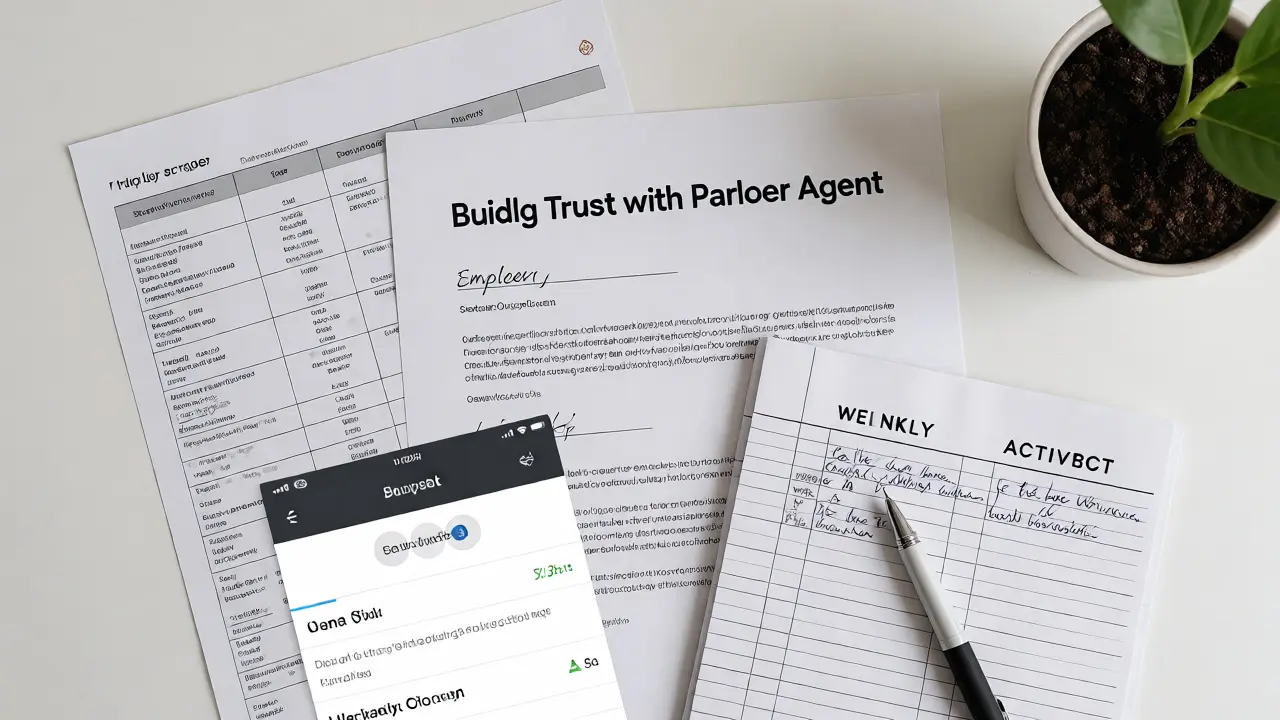
Building a Relationship with Your Agent
Your parole agent is not your enemy, but they are your gatekeeper. Treat them like a boss you want to impress. Be proactive. If you know you’ll be traveling for work, ask for permission weeks in advance. Provide a detailed itinerary: flight numbers, hotel addresses, and contact info. Attach this to your travel request form.
When you meet, start with your wins. "I completed my anger management module this week." Then discuss challenges. "I’m struggling to find childcare, which affects my shift availability." Showing self-awareness helps agents advocate for you. They can’t help with problems they don’t know exist.
Frequently Asked Questions
What happens if I lose my paystub?
Don’t panic. First, check your employee portal if your company uses one. Most modern HR systems allow you to download historical paystubs instantly. If not, call your payroll department. Request a duplicate in writing (email is fine). While waiting, create a temporary log noting the date, amount, and hours, and mark it "Pending Official Copy." Submit this interim log to your agent so you remain compliant while waiting for the official doc.
Do I need to document volunteer work?
Yes, absolutely. Volunteer work counts toward community service requirements and demonstrates productive use of time. Get a supervisor at the non-profit to sign a verification form listing your hours and tasks. Without this, those hours technically don’t exist in the eyes of the court. Keep a running tally in your binder.
How long should I keep my parole documents?
Keep them for at least two years after your parole ends. Why? Because sometimes old violations surface, or you might need proof of rehabilitation for housing applications or professional licensing boards later. Digital storage is cheap and easy, so scan everything and back it up twice.
Can I use screenshots of bank transactions as proof of payment?
Screenshots are helpful but rarely sufficient on their own. They show money moved, but not necessarily to whom or for what purpose. Always pair a screenshot with a receipt or confirmation number. If you paid via Zelle or Venmo, ensure the memo field says "Restitution Case #XYZ." If it just says "Thanks," print a detailed transaction history from your bank that includes the recipient’s name.
What if my employer refuses to give me a verification letter?
Some small businesses are bureaucratic-challenged. If they won’t write a letter, offer to draft it for them to simply sign. Make it short: "Confirming [Name] has been employed since [Date] at $[Rate]/hr." Hand them the pen. If they still refuse, use your paystubs plus a direct phone number for your supervisor. Tell your agent, "My employer prefers phone verification," and provide the number. This shifts the burden of proof to the employer to answer calls.
Final Thoughts: Stay Organized, Stay Free
Compliance isn’t about perfection; it’s about consistency. You will make mistakes. You will forget a date. The key is catching it early. Review your files every Sunday night. Spend fifteen minutes checking your portal, organizing your binder, and planning your week. This small habit prevents big headaches. Remember, your freedom is worth the effort of filing a single piece of paper. Don’t let a missing signature cost you your liberty.