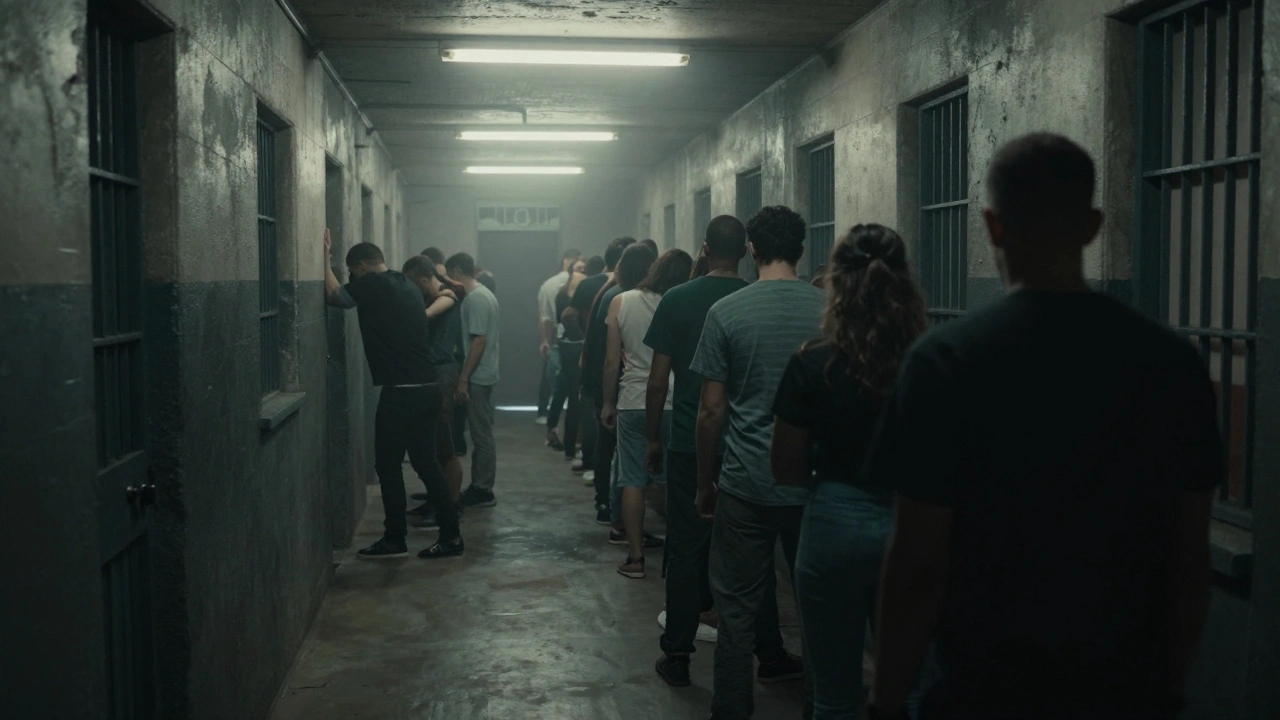
Imagine you are locked inside a facility where the air is thick with smoke, medical care is a rumor, and violence is just part of the daily routine. You try to complain, but your letters go into a black hole. For millions of people behind bars, this isn't a hypothetical nightmare-it's reality. But there is a federal backstop designed specifically for these moments of systemic failure. It’s called Civil Rights Enforcement, which is the process by which the U.S. Department of Justice investigates and remedies patterns of unconstitutional conduct in state and local correctional facilities. Most people think the Department of Justice (DOJ) only prosecutes crimes or handles high-profile political scandals. That’s a common misconception. A huge part of their job is acting as a watchdog over the institutions that hold us captive. When a jail or prison system breaks the law-not just once, but repeatedly-the DOJ steps in. They don’t fix individual grievances; they tear down broken systems. This guide explains exactly how that machinery works, who pulls the levers, and what it means for the people living inside those walls.
The Legal Engine: What Is CRIPA?
To understand how the DOJ polices prisons, you have to look at one specific law: the Civil Rights of Institutionalized Persons Act, also known as CRIPA. It was enacted in 1980 and gives the Attorney General the power to sue state and local governments when they engage in a "pattern or practice" of violating constitutional rights. Here is the catch that confuses most people: CRIPA does not cover federal prisons. It doesn’t cover private prisons unless they are acting as an arm of a state or local government. And crucially, it does not allow individuals to sue for money damages. If you were beaten up by a guard last Tuesday, CRIPA isn’t your ticket to a payout. Instead, it is a tool for structural change. The DOJ uses it to force a whole jail system to stop beating inmates, improve sanitation, or provide adequate mental health care. Think of it like this: if a single tree is sick, you treat the tree. If the entire forest is dying because the soil is poisoned, you need a different approach. CRIPA treats the soil. It focuses on injunctive relief-court orders that force agencies to change their policies, train their staff, and upgrade their facilities. Alongside CRIPA, the DOJ also uses authority from the Violent Crime Control and Law Enforcement Act of 1994, codified at 34 U.S.C. § 12601, to target similar patterns of misconduct in law enforcement and corrections agencies.
Who Actually Does the Work?
The heavy lifting falls to the Civil Rights Division, established in 1957 under President Dwight D. Eisenhower. Within this division sits the Special Litigation Section (SPL). As of 2024, the Division is led by Assistant Attorney General Kristen Clarke, who has pushed for a more aggressive stance on protecting vulnerable populations. The SPL is small. Really small. While they oversee pattern-or-practice investigations for thousands of police departments and correctional facilities nationwide, their staff is limited. This resource constraint means they can’t investigate every complaint that comes in. They have to be strategic. They look for the biggest fires burning across the country. Their docket is split into four main buckets: Corrections, Juvenile Justice, Disability Rights, and Law Enforcement Agencies. When the SPL opens a case in a prison or jail, they aren’t just sending in a couple of lawyers. They bring in experts. These might include architects to assess cell safety, doctors to evaluate medical protocols, and psychologists to review mental health treatment plans. This multidisciplinary approach ensures that the DOJ understands the technical side of running a facility, not just the legal theory.
The Investigation Process: From Complaint to Courtroom
So, how does a jail get put in the crosshairs? It usually starts with intake. The DOJ receives tips from everywhere: letters from incarcerated people, reports from family members, news articles about riots or deaths, and referrals from advocacy groups. If enough red flags wave, they open a formal investigation. Once the investigation begins, the process follows a predictable rhythm:
- On-Site Inspections: Investigators visit the facility. They walk the floors, interview staff, and talk to incarcerated people. They check records, observe conditions, and look for discrepancies between policy and practice.
- Data Analysis: They crunch numbers. How many assaults happened last year? How long did it take for an inmate to see a doctor after reporting chest pain? Data reveals patterns that anecdotes might miss.
- Findings Letter: If the DOJ finds violations, they issue a formal letter to the state or local officials. This letter details exactly what is wrong and cites the specific laws being broken. Under CRIPA, the DOJ must give the agency at least 49 days to negotiate before filing a lawsuit, unless there is imminent danger.
- Negotiation: Most cases end here. The DOJ and the facility agree on a remedial plan. This often takes the form of a settlement agreement or a consent decree.
- Litigation: If the agency refuses to cooperate or ignores the findings, the DOJ files a lawsuit in federal court. This is rare but happens when jurisdictions dig in their heels.
What Issues Trigger DOJ Intervention?
The DOJ doesn’t nitpick minor infractions. They focus on severe, systemic failures that violate the Eighth Amendment’s prohibition against cruel and unusual punishment or the Fourteenth Amendment’s guarantee of due process. Here are the most common triggers:
- Excessive Force: When guards routinely use unnecessary physical force against inmates, especially those who are compliant or mentally ill.
- Failure to Protect: If the facility knows inmates are at risk of sexual assault or gang violence and does nothing to stop it.
- Inadequate Medical Care: Delays in treating serious illnesses, lack of access to specialists, or ignoring chronic pain. This includes mental health care, where denial of therapy or medication can lead to suicide.
- Overuse of Solitary Confinement: Placing people in isolation for weeks or months without cause, which courts have increasingly recognized as psychologically damaging.
- Discrimination: Denying services based on race, religion, disability, or gender identity. For example, failing to provide accessible housing for wheelchair users or ignoring harassment of LGBTQ+ prisoners.
The Power of Consent Decrees
When a facility agrees to reform, they sign a consent decree, which is a legally binding agreement filed in federal court that outlines specific reforms a correctional facility must implement to resolve civil rights violations. Think of it as a roadmap for change. It might require hiring more nurses, building new cells, rewriting use-of-force policies, or installing better ventilation systems. These decrees are monitored closely. An independent monitor-usually hired by the court-checks in regularly. They review documents, conduct site visits, and file progress reports. The facility must prove "substantial compliance" before the decree ends. This process often lasts five to ten years. It’s expensive and exhausting for the agency, but it’s the only way to ensure that promises made on paper actually translate to safer conditions inside. For example, in cases involving juvenile detention centers, consent decrees have forced states to reduce the use of isolation, improve education services, and hire more mental health professionals. The impact is tangible: fewer self-harm incidents, better educational outcomes, and a less traumatic experience for young people caught up in the justice system.

Political Winds and Oversight Gaps
One uncomfortable truth about DOJ oversight is that it swings with the political winds. During the Trump administration (2017-2021), the Civil Rights Division scaled back significantly. Attorney General Jeff Sessions issued memos discouraging consent decrees, leading to a sharp drop in new investigations. Existing cases stalled, and staff was depleted. Advocacy groups like the MacArthur Justice Center documented how this retreat left abusive conditions unchecked. Under the Biden administration, starting in January 2021, there has been a revitalization. Assistant Attorney General Kristen Clarke testified that the Division opened 11 new pattern-or-practice investigations into police departments alone in her first year-a stark contrast to the previous administration’s single investigation. While her testimony focused heavily on policing, the same energy has flowed into corrections work. More hotlines have been activated, more communities engaged, and more resources directed toward identifying systemic abuses. However, the underlying structure remains fragile. The Special Litigation Section is still understaffed relative to its mandate. With over 3,000 local jails and 1,800 state and federal prisons in the U.S., the DOJ can only scratch the surface. Critics argue that Congress needs to provide more funding and statutory protections to prevent future administrations from rolling back enforcement efforts.
How You Can Help: Community Engagement
You don’t need to be a lawyer to contribute to civil rights enforcement. The DOJ relies heavily on community input. They maintain dedicated hotlines and email addresses for each active investigation. For instance, if you know someone in the Mississippi Department of Corrections, you can call 833-591-0288 to share information. For the Fulton County Jail, the number is 844-473-4092. These channels are vital. Incarcerated people often face retaliation for speaking out, so family members, friends, and advocates play a critical role in bringing information to light. Your tip could be the piece of evidence that helps investigators connect the dots. Whether it’s a photo of moldy food, a record of denied medical appointments, or a witness account of brutality, every detail matters. Advocacy organizations like the ACLU, NAACP Legal Defense Fund, and Prison Policy Initiative also track DOJ actions and push for accountability. By staying informed and amplifying these stories, you help keep the pressure on both the facilities and the federal government to do their jobs.
| Entity | Role/Function | Key Authority/Law | Scope |
|---|---|---|---|
| DOJ Civil Rights Division | Enforces federal civil rights laws | Civil Rights Act of 1957 | Nationwide |
| Special Litigation Section (SPL) | Investigates patterns of misconduct | CRIPA, 34 U.S.C. § 12601 | State/Local Facilities |
| CRIPA | Legal basis for suing institutions | 42 U.S.C. § 1997 et seq. | Jails, Prisons, Juvenile Centers |
| Independent Monitor | Ensures compliance with decrees | Federal Court Order | Specific Facility/System |
Can I sue my prison directly using CRIPA?
No. CRIPA is a tool used exclusively by the U.S. Department of Justice. It does not create a private right of action, meaning individuals cannot file lawsuits under CRIPA for personal damages. If you have experienced a violation of your rights, you may need to pursue other legal avenues, such as a Section 1983 claim under the Civil Rights Act of 1871, which allows individuals to sue for monetary damages.
Does the DOJ oversee federal prisons?
Generally, no. CRIPA applies to state and local facilities, including county jails and state-run prisons. Federal prisons, operated by the Bureau of Prisons, are subject to different oversight mechanisms, primarily internal reviews and congressional inquiries. However, the DOJ can still investigate federal agencies under other statutes if constitutional violations occur.
How long does a DOJ investigation take?
There is no fixed timeline. Investigations can take several months to over a year depending on the complexity of the case and the amount of data involved. Once a consent decree is signed, monitoring can continue for five to ten years or more until the facility demonstrates substantial compliance with all agreed-upon reforms.
What happens if a jail refuses to cooperate with the DOJ?
If a jurisdiction refuses to negotiate or implement necessary reforms, the DOJ will file a lawsuit in federal court. The court can then issue injunctions ordering specific actions, impose penalties for non-compliance, and appoint receivers to take control of operations in extreme cases. Litigation is a last resort but serves as a powerful enforcement mechanism.
How can I report abuse in a local jail?
You can contact the DOJ’s Civil Rights Division directly through their public hotline or website. Look for specific contact numbers listed for active investigations in your area. Additionally, you can reach out to local civil rights organizations, ombudsmen, or media outlets. Documenting incidents with dates, times, and names strengthens any potential investigation.