
Walk into any medium-security jail in the Pacific Northwest and you’ll notice something immediately: not everyone is treated the same. A first-time offender charged with shoplifting isn’t housed next to a repeat violent offender awaiting trial for armed robbery. This separation isn’t random; it’s the result of jail housing assignments, a complex operational process that balances safety, legal rights, and facility efficiency. For administrators and staff, getting this right is the difference between a calm intake day and a chaotic cell block.
At its core, housing assignment is about matching an individual’s risk profile with the appropriate level of supervision and environment. But how do facilities actually make these decisions? Is it based on intuition, a standardized algorithm, or a mix of both? And what role do interviews and questionnaires play in painting the full picture of an inmate before they are placed in a cell?
The Core Components of Inmate Classification
To understand housing assignments, we have to break down the machinery behind them. Inmate Classification is the systematic process of evaluating an individual's background, behavior, and needs to determine their appropriate placement within a correctional facility. It is not a one-time event but a continuous cycle that starts at booking and continues throughout the stay.
This process relies on three main pillars:
- Risk Assessment: Determining the likelihood of escape, violence, or self-harm.
- Need Assessment: Identifying medical, mental health, or educational requirements.
- Program Eligibility: Matching the inmate with available services like drug treatment or vocational training.
When these pillars are aligned correctly, the facility operates smoothly. When they misalign, you get mismatches-like placing a non-violent drug offender in a high-security unit where tensions are high, or keeping a suicidal detainee in general population without adequate monitoring.
Why Interviews Are More Than Just Formalities
Many people assume classification is just data entry. They look at a criminal record and assign a number. But experienced correctional officers know that paperwork doesn’t tell the whole story. The initial intake interview is where the human element comes in.
During this conversation, staff look for cues that a questionnaire might miss. Does the inmate seem agitated? Do they have visible signs of trauma? Are they cooperative or defensive? These behavioral indicators feed into the risk score. For example, a detainee who appears overly calm after a serious arrest might be suppressing panic, which could lead to sudden outbursts later. An interviewer trained to spot these nuances can flag the need for closer observation in the first 48 hours.
However, interviews are subjective. That’s why they must be paired with objective tools. If an officer feels an inmate is "high risk" based on gut feeling, they need evidence to back it up. This is where structured questionnaires come in.
The Role of Standardized Questionnaires
Standardized questionnaires provide the consistency that interviews lack. Tools like the LSI-R (Level of Service Inventory - Recidivism) or local equivalent state validation instruments are designed to minimize bias. They ask specific questions about age, prior convictions, family support, and employment history.
These scores generate a numerical value. Let’s say an inmate scores a 14 on a scale of 0-30. That number translates directly to a security level. A low score might mean minimum security or a work-release program. A high score triggers maximum security protocols. The beauty of these tools is their repeatability. Two different officers administering the same test to the same person should get similar results, reducing the "who got lucky" factor of manual judgment.
| Method | Strengths | Weaknesses | Best Used For |
|---|---|---|---|
| Intake Interview | Captures behavioral cues, immediate mental state | Subjective, time-consuming | Initial screening, crisis identification |
| Standardized Questionnaire | Objective, consistent, scalable | Misses nuance, static data | Long-term risk scoring, program eligibility |
| Behavioral Observation | Real-time data, dynamic adjustment | Requires constant staffing, prone to fatigue errors | Ongoing housing adjustments, incident response |

Security Levels and Housing Units
Once the risk and need assessments are complete, the inmate is assigned to a specific housing unit. In most U.S. jails, these fall into four categories: Minimum, Medium, Maximum, and Administrative Segregation.
Minimum Security units often look more like dormitories than cells. They house inmates with low escape risk and no recent violent charges. Think of first-time DUI offenders or those awaiting minor civil hearings. The goal here is reintegration preparation.
Medium Security is the bulk of most jail populations. These units have standard cell blocks, controlled movement, and moderate supervision. Most felony defendants end up here unless they have aggravating factors.
Maximum Security is reserved for those deemed high-risk for escape or violence. These units feature reinforced doors, limited visitation, and higher staff-to-inmate ratios. You’ll find pre-trial detainees charged with capital crimes or those with a history of gang affiliation here.
Administrative Segregation is different. It’s not necessarily about risk; it’s about protection. This includes protective custody for witnesses, solitary confinement for disciplinary violations, and medical isolation. Misusing this unit for general housing leads to overcrowding issues elsewhere.
Common Pitfalls in Assignment Processes
Even well-funded facilities make mistakes. What are the most common ones?
- Static Data Reliance: Relying solely on past records without considering current circumstances. An inmate who was violent five years ago may have completed anger management programs since then. If the system doesn’t update the risk score, they remain in max security unnecessarily.
- Staff Fatigue: Intake happens 24/7. The officer working the 3 AM shift might rush through the interview compared to the 9 AM shift. This inconsistency leads to uneven classification.
- Lack of Re-evaluation: Housing assignments shouldn’t be set in stone. If an inmate behaves poorly in medium security, they need to move up. If they excel in minimum security, they might qualify for work release. Facilities that don’t re-assess every 30 days create stagnant environments.
- Gang Affiliation Blind Spots: Sometimes, housing two rivals together causes trouble. Other times, separating known associates prevents collusion. Staff need access to updated gang databases to make these micro-decisions.
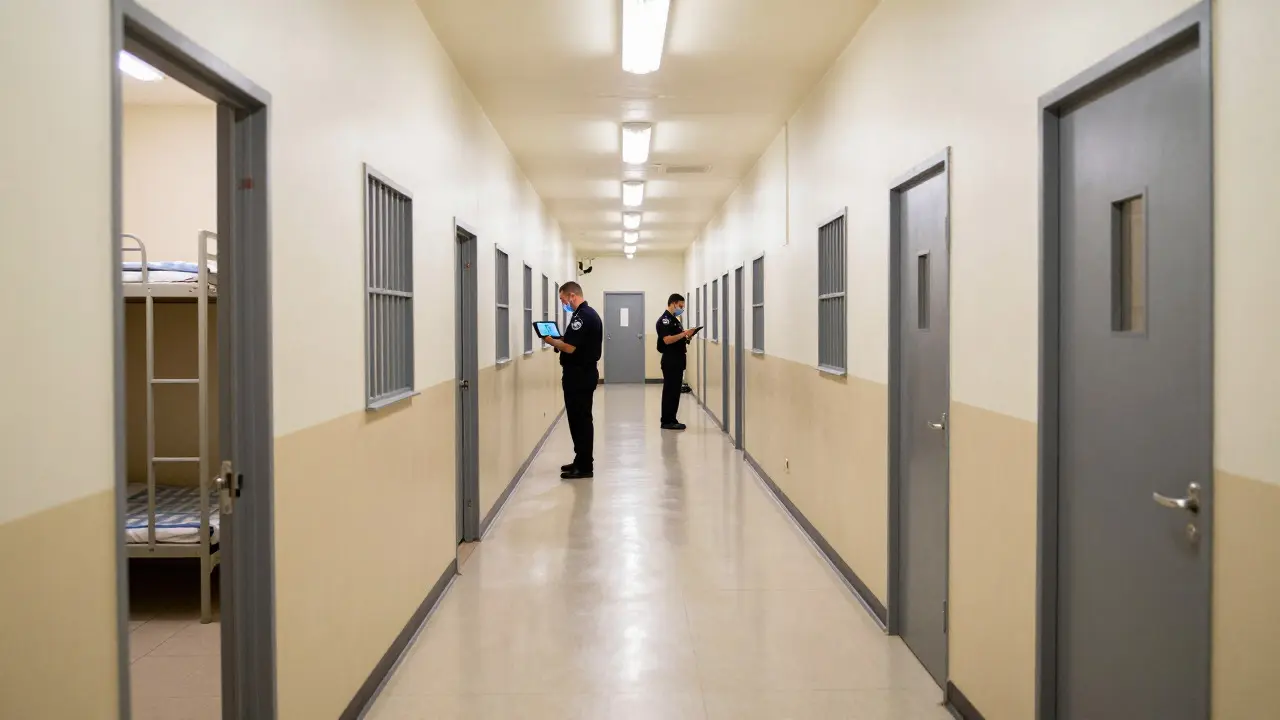
Recommendations for Improving Outcomes
So, how do we fix these gaps? Here are practical steps for jail administrators looking to tighten their operations:
- Implement Dynamic Risk Models: Move beyond static checklists. Use software that updates risk scores based on real-time behavior logs. If an inmate gets a ticket for fighting, their score should automatically recalculate.
- Train Staff on Behavioral Cues: Invest in ongoing training for intake officers. Teach them to recognize early signs of suicide risk or acute psychosis. This reduces liability and improves safety.
- Create Clear Re-classification Protocols: Define exactly when and how an inmate moves between units. Remove ambiguity from the decision-making process so that housing changes are based on data, not personal preference.
- Integrate Mental Health Screening: Don’t treat mental health as an afterthought. Early identification of conditions like PTSD or bipolar disorder allows for proper housing in specialized units rather than general population, where symptoms can worsen.
By combining the human insight of interviews with the objectivity of questionnaires, facilities can create a housing system that is both safe and fair. It’s not about punishing everyone equally; it’s about managing risk effectively.
Frequently Asked Questions
How long does the initial housing assignment process take?
Typically, the initial classification takes 24 to 48 hours after booking. During this time, staff complete the interview, administer questionnaires, and review medical records. Complex cases involving mental health or gang affiliation may take longer to finalize.
Can an inmate appeal their housing assignment?
Yes, most jurisdictions allow inmates to request a re-classification hearing. They can argue that their risk level has changed or that their current housing is inappropriate. This process usually involves submitting a written petition and meeting with a classification committee.
What is the difference between jail and prison classification?
Jails hold short-term detainees (usually under one year), while prisons hold long-term inmates (one year or more). Jail classification focuses heavily on pre-trial status and immediate safety risks, whereas prison classification emphasizes long-term rehabilitation and recidivism reduction.
How does overcrowding affect housing assignments?
Overcrowding forces facilities to ignore ideal classification matches. When beds are scarce, lower-risk inmates might be placed in higher-security units simply because there is space. This increases tension and can lead to more incidents, creating a negative feedback loop.
Are electronic monitoring systems used in housing assignments?
Not typically for internal housing, but some jails use biometric scanners to track inmate movement between units. This helps ensure that inmates stay in their assigned zones and alerts staff if someone enters a restricted area, aiding in the enforcement of housing rules.