
You walk into the housing unit, and the air feels heavy. Inmate 402 is pacing in circles, muttering to himself, hands shaking. The old instinct might be to shout a command or call for backup immediately. But what if you could de-escalate the situation before it turns violent? What if you had the tools to recognize that this isn't defiance, but a panic attack or a psychotic break?
Mental Health First Aid (MHFA) is a skills-based training course that teaches participants about mental health and substance-use issues. It does not teach people to diagnose or treat conditions; rather, it provides them with the skills to offer initial help to someone experiencing a developing problem or crisis. For correctional officers, this training has shifted from a "nice-to-have" soft skill to a critical safety protocol. With rising rates of mental illness among incarcerated populations, officers are often the first responders to psychiatric emergencies, yet they rarely receive clinical training.
| Traditional Approach | MHFA-Informed Approach |
|---|---|
| Views erratic behavior as non-compliance or threat. | Views erratic behavior as potential distress or symptom. |
| Escalates tension through force or isolation. | De-escalates through verbal engagement and presence. |
| Officer stress increases due to constant conflict. | Officer confidence grows through predictable protocols. |
The Reality Behind Bars
Let’s look at the numbers. According to the Bureau of Justice Statistics, roughly half of all prisoners and jail inmates have a history of mental health problems. That means when you’re working a shift, you aren’t just guarding against escape attempts or contraband; you’re managing a population where schizophrenia, bipolar disorder, and severe depression are common. Many of these individuals enter the system without stable medication or support networks.
Without proper training, an officer might mistake a manic episode for aggressive posturing. They might interpret the flat affect of someone on heavy antipsychotics as laziness or disrespect. This misinterpretation leads to disciplinary write-ups, solitary confinement, and increased recidivism. Crisis Intervention Team (CIT) training programs often incorporate MHFA principles to help law enforcement and corrections staff better understand mental health disorders. By learning to spot the early warning signs, you change the trajectory of the interaction.
The ALGEE Action Plan
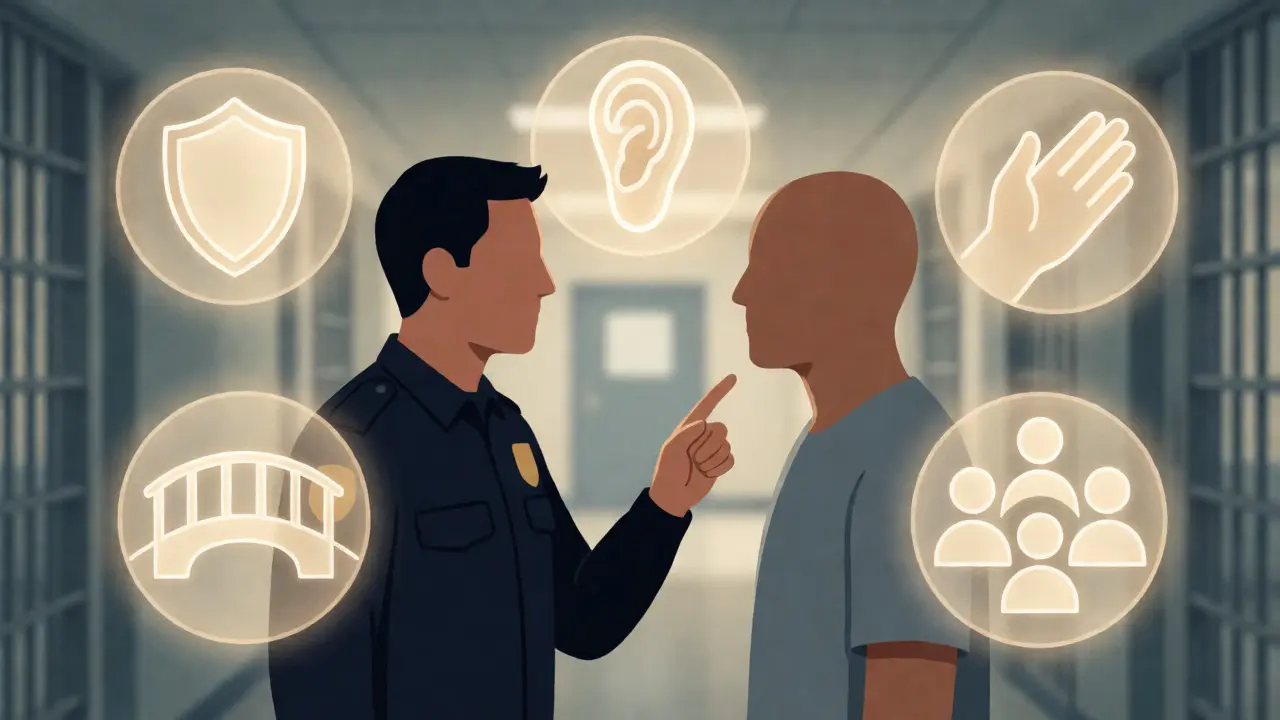
The core of Mental Health First Aid is the ALGEE action plan. It’s a mnemonic designed to be easy to remember during high-stress moments. If you’re new to this, think of it as your tactical checklist for psychological emergencies.
- A - Approach, assess for risk of suicide or harm: Before you act, observe. Is the person safe? Are they holding something dangerous? Do they seem disconnected from reality? Your job here is assessment, not judgment.
- L - Listen nonjudgmentally: This is the hardest part for many officers. You have to suspend your internal monologue about rules and regulations. Let them talk. Often, simply being heard lowers agitation levels significantly.
- G - Give reassurance and information: Tell them what is happening. "I see you’re upset." "We can get help." Clear, calm communication reduces fear.
- E - Encourage appropriate professional help: You aren’t a therapist. Your role is to bridge the gap between the inmate and the medical or mental health staff. Know who to call and how to document the referral properly.
- E - Encourage self-help and other support strategies: Connect them with peer support groups or religious services within the facility if available.
This framework works because it breaks down a chaotic emotional event into manageable steps. It gives you agency when you feel helpless.
Recognizing Specific Conditions
You don’t need to be a psychiatrist to recognize patterns. MHFA training focuses on four main areas: anxiety, depression, psychosis, and substance use. Here is how these show up in a correctional setting.
Anxiety Disorders are characterized by excessive fear or worry that interferes with daily functioning. In prison, this often looks like refusal to leave the cell, excessive hand-washing, or inability to sleep. An anxious inmate might appear hostile because they are terrified. Recognizing this prevents unnecessary use of force.
Depression involves persistent sadness and loss of interest, often leading to social withdrawal. Watch for changes in hygiene, lack of participation in yard time, or sudden weight loss. Depression in men often manifests as irritability rather than tears. If an inmate who was previously active becomes withdrawn, take note.
Psychosis is a condition where a person loses contact with reality, often experiencing hallucinations or delusions. This is tricky. An inmate talking to themselves might be praying, or they might be hearing voices. Look for disorganized speech, bizarre behavior, or extreme agitation. Never argue with a delusion. Validate their feeling, not the fact. "I know you’re scared," works better than "There is no spider on your bed."
Substance Use Disorders involve problematic patterns of alcohol or drug use that lead to significant impairment or distress. Withdrawal symptoms can mimic mental illness. Tremors, sweating, and confusion during intake could mean alcohol withdrawal, which can be fatal. MHFA helps you distinguish between behavioral issues and physiological crises requiring immediate medical attention.
Beyond the Inmate: Staff Wellness
Here is a truth nobody likes to admit: correctional officers suffer from high rates of PTSD, burnout, and secondary trauma. You absorb the stress of the environment. MHFA training isn’t just for the inmates; it’s for you too. Understanding mental health concepts helps you process your own reactions to traumatic events.
Many departments are now implementing peer support programs based on MHFA principles. These allow officers to check in on each other using the same ALGEE framework. If you notice a colleague becoming isolated, irritable, or abusing substances, you can approach them with empathy rather than suspicion. This cultural shift improves retention and reduces sick days.
Implementation Challenges
Adopting MHFA in corrections isn’t without hurdles. Budget constraints often limit training hours. There is also skepticism among veteran staff who view mental health approaches as "soft." To overcome this, frame MHFA as a safety tool. It keeps you safer. De-escalation means fewer injuries. Fewer injuries mean less paperwork and fewer court cases.
Another challenge is consistency. If one officer uses MHFA techniques and another responds with aggression, the inmate receives mixed signals. Leadership must commit to standardized responses. Regular refresher courses are essential. Skills fade if they aren’t used.

Practical Tips for Immediate Application
You don’t need to wait for formal certification to start using these ideas. Here are three things you can do tomorrow:
- Watch your tone: Lower your volume and pitch. High-pitched shouting triggers fight-or-flight responses. Calm voices invite cooperation.
- Respect personal space: Mental health crises often involve sensory overload. Standing too close can feel threatening. Keep a safe distance while maintaining visibility.
- Document behaviors, not labels: Instead of writing "inmate was crazy," write "inmate was pacing, speaking rapidly, and unable to sit still." This helps medical staff make accurate assessments later.
By focusing on observable facts, you remove stigma from the record and provide useful data for treatment teams.
Frequently Asked Questions
Is Mental Health First Aid training mandatory for all correctional officers?
It depends on the jurisdiction and specific facility policies. While not universally mandated by federal law, many state departments of corrections and large jail systems have integrated MHFA or similar Crisis Intervention Team (CIT) training into their standard curriculum for new hires and ongoing professional development. It is increasingly seen as a best practice for liability reduction and staff safety.
Can correctional officers diagnose mental health conditions after MHFA training?
No. Mental Health First Aid explicitly states that it does not train individuals to diagnose or treat mental health conditions. Officers learn to recognize signs and symptoms of various disorders so they can respond appropriately and refer the individual to qualified medical or mental health professionals. Diagnosis remains the responsibility of psychiatrists, psychologists, or licensed clinicians.
How does MHFA training differ from traditional security training?
Traditional security training focuses on control, containment, and physical tactics. MHFA training focuses on recognition, de-escalation, and connection. While security training teaches you how to physically restrain someone, MHFA teaches you how to prevent the need for restraint by addressing the underlying emotional or psychological distress driving the behavior.
What is the most common mental health issue encountered in prisons?
While exact statistics vary by region, substance use disorders and co-occurring mental health conditions (dual diagnosis) are extremely prevalent. Anxiety and depression are also widespread, often exacerbated by the prison environment itself. Psychotic disorders, such as schizophrenia, represent a smaller percentage of the population but account for a disproportionate amount of emergency interventions.
Does MHFA training help reduce violence in facilities?
Yes, studies suggest that effective de-escalation techniques learned in MHFA and CIT programs can reduce the frequency of violent incidents. By responding to distress with empathy and clear communication rather than immediate force, officers can lower the temperature of interactions, preventing minor conflicts from escalating into assaults.