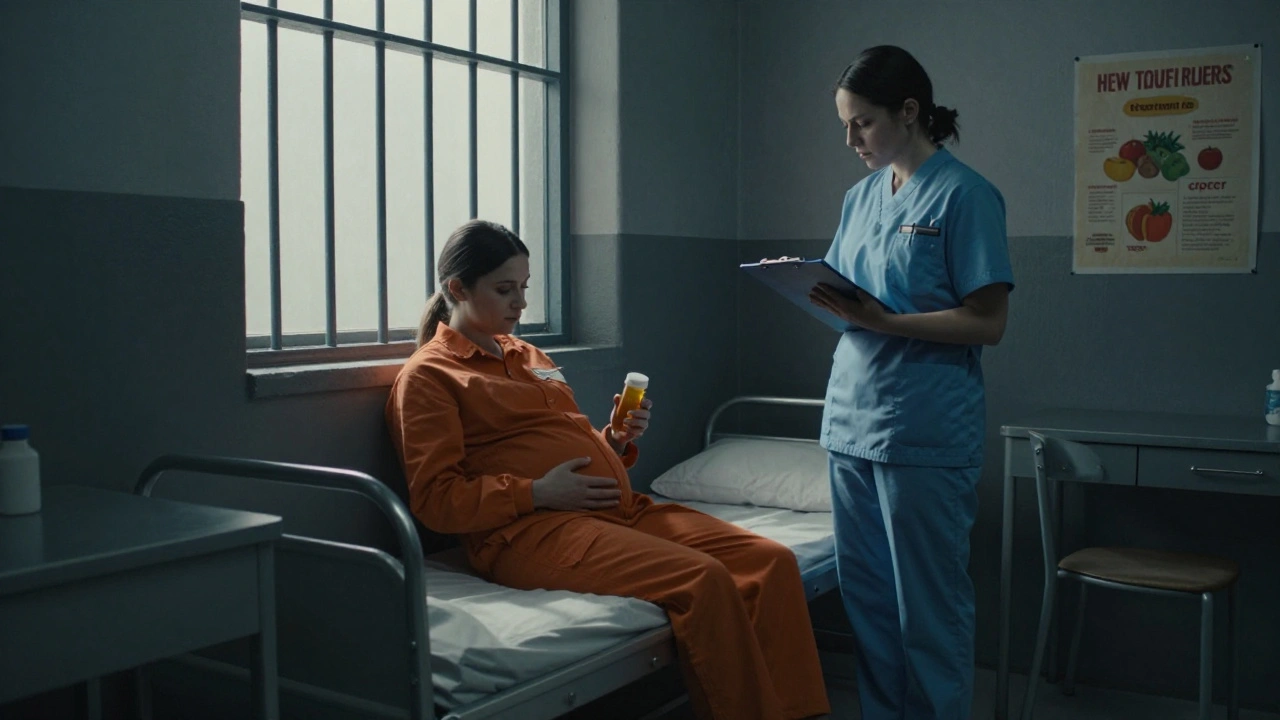
Every year, tens of thousands of pregnant people enter U.S. correctional facilities. Many of them have never received consistent medical care before. Inside prison or jail, their pregnancies don’t disappear-they become a hidden public health crisis. Despite being a population that needs more support, pregnant incarcerated women often face delays, gaps, and outright denials of basic prenatal care. The system isn’t designed to care for them. And the consequences show up in birth outcomes, mental health, and long-term family stability.
How Many Pregnant People Are Behind Bars?
In 2023, the Bureau of Justice Statistics released the first nationwide data on pregnancy in correctional facilities in nearly a decade. The numbers are startling. Across 47 states and federal prisons, 2% of all women admitted tested positive for pregnancy. That’s 1,157 pregnancies identified just at admission. On any given day, about 328 pregnant people were locked up in state prisons alone. Add in local jails, and the estimate jumps to 58,000 pregnant individuals entering U.S. correctional systems each year. These aren’t just numbers. Each one represents someone who may have been homeless, abused, struggling with addiction, or trapped in poverty before arrest. Nearly 8,000 of those pregnant people enter custody with an opioid use disorder. That means their bodies are already under stress before they even get to the infirmary. Demographics show that 60% of pregnant incarcerated women are white, 20% Black, 9% Hispanic, and smaller percentages from other racial groups. But race doesn’t explain everything. What does? Access-or lack of it.Pregnancy Outcomes: More Live Births, But Why?
In 2023, of the 727 documented pregnancy outcomes in prisons, 665 ended in live births-91.5%. That’s far higher than the national average of 67% live births in the general population. Why the difference? It’s not because incarcerated women have healthier pregnancies. It’s because abortion access is nearly impossible behind bars. Even in states where abortion is legal, most prisons don’t allow transportation to clinics. Some require the person to pay for the procedure themselves. Others delay or deny requests outright. The result? Abortions made up just 2.1% of outcomes in custody, compared to 17% outside. Miscarriages and stillbirths were rare-6.5% and 0.5% respectively. But that doesn’t mean care was good. It means the system prevented the worst outcomes through sheer luck, not quality care. Preterm birth rates were low overall at 5%, but some states hit 10% or higher. That’s a red flag. And here’s the kicker: no maternal deaths were reported in 2023. That sounds like a win. But it’s more likely a sign that deaths are undercounted. Many women give birth in prison, then get released within days. If they die of complications a week later, they’re no longer counted in prison statistics.Prenatal Care: The Gap Between Policy and Practice
Prisons say they’re doing everything right. According to 2023 data, 96% of prisons schedule a medical appointment within two weeks of a positive pregnancy test. 100% say they provide routine care throughout pregnancy. Sounds great-until you look closer. The real problem? What counts as “prenatal care” in prison? In 2023, only 50% of state prisons and 46% of federal prisons provided actual prenatal guidance: nutrition advice, exercise plans, medication management, or screening tests. That’s a drop from 2016, when the numbers were higher. A 2022 study compared 2,544 pregnant incarcerated women to nearly 9,000 non-incarcerated women. The result? 34% of incarcerated women received inadequate prenatal care. They were twice as likely to have babies with low birthweight. One Texas study found something powerful: for every additional prenatal visit an incarcerated mother had, her baby’s birthweight increased. But only if she entered prison in the first trimester. After that, the benefit faded. This isn’t about laziness. It’s about systems that treat pregnancy as an inconvenience. If you’re in a facility with no OB-GYN on staff, and nurses aren’t trained in prenatal care, you’re stuck waiting for a visiting provider who comes once a month. Or worse-you’re told to wait until your next scheduled check-up, which might be six weeks away.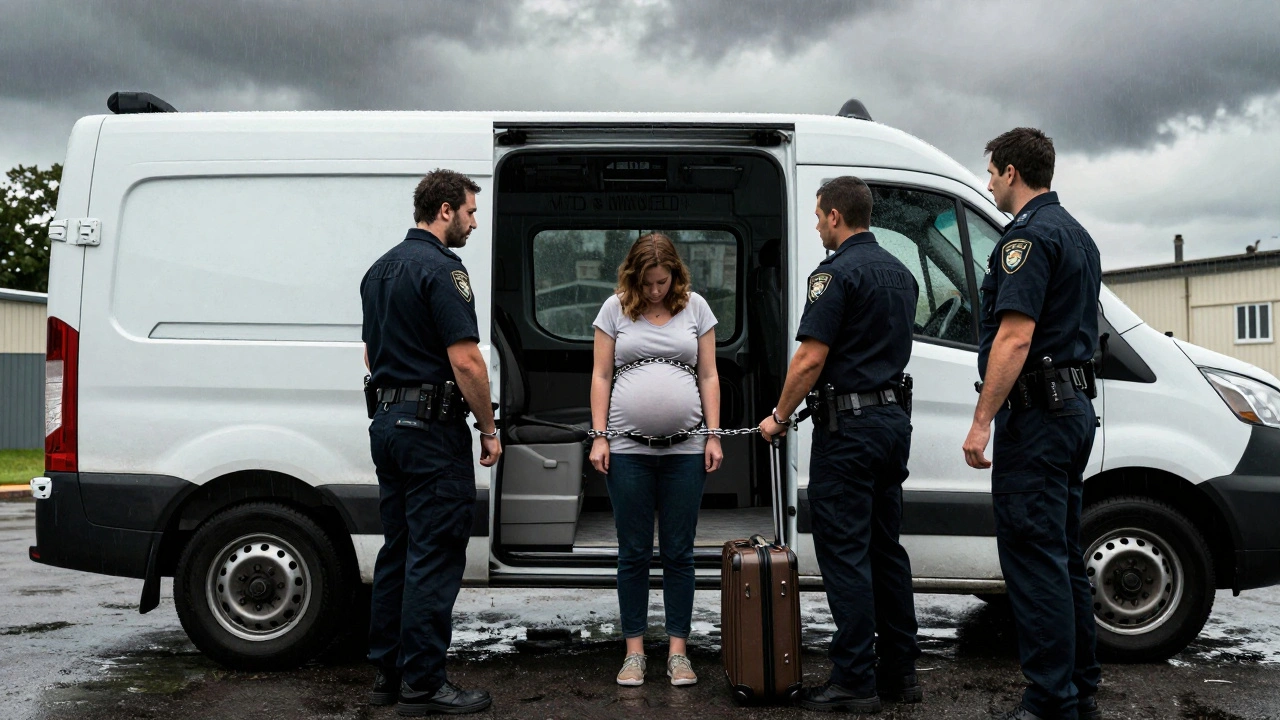
Barriers to Care: Distance, Cost, and Control
Getting care isn’t just about who’s available-it’s about whether you can get there. More than half of prisons rely on off-site appointments. But getting to a clinic means being shackled during transport, sometimes for hours. Some women report being left in restraints during labor. Others are denied transport because “it’s not a medical emergency.” And then there’s the money. Some prisons charge copayments for prenatal visits. For someone with $0 in their account, that’s a barrier. No one can afford $5 or $10 when they’re living on $10 a month in commissary funds. Even basic supplies are scarce. One woman in Ohio told researchers she had to use a towel as a maternity pad because the prison didn’t provide them. Another in Georgia said she wasn’t given prenatal vitamins until her third trimester-after she asked repeatedly. These aren’t outliers. They’re routine.Mental Health: The Silent Crisis
Pregnancy doesn’t happen in a vacuum. Most incarcerated women have histories of trauma, abuse, and mental illness. 69% of women in state prisons and 52% in federal prisons have a diagnosed mental health condition. One in five reported serious psychological distress in the past 30 days. During pregnancy, those numbers get worse. In one study of 58 incarcerated mothers, more than a third met the clinical criteria for moderate to severe depression. Two-thirds of those with postpartum depression had already struggled with anxiety, PTSD, or bipolar disorder before becoming pregnant. Yet four state prison systems-Alabama, Iowa, Massachusetts, and Washington-don’t screen for depression at all during pregnancy or after birth. No one checks in. No one asks how she’s feeling. No one connects her to counseling. This isn’t negligence. It’s neglect.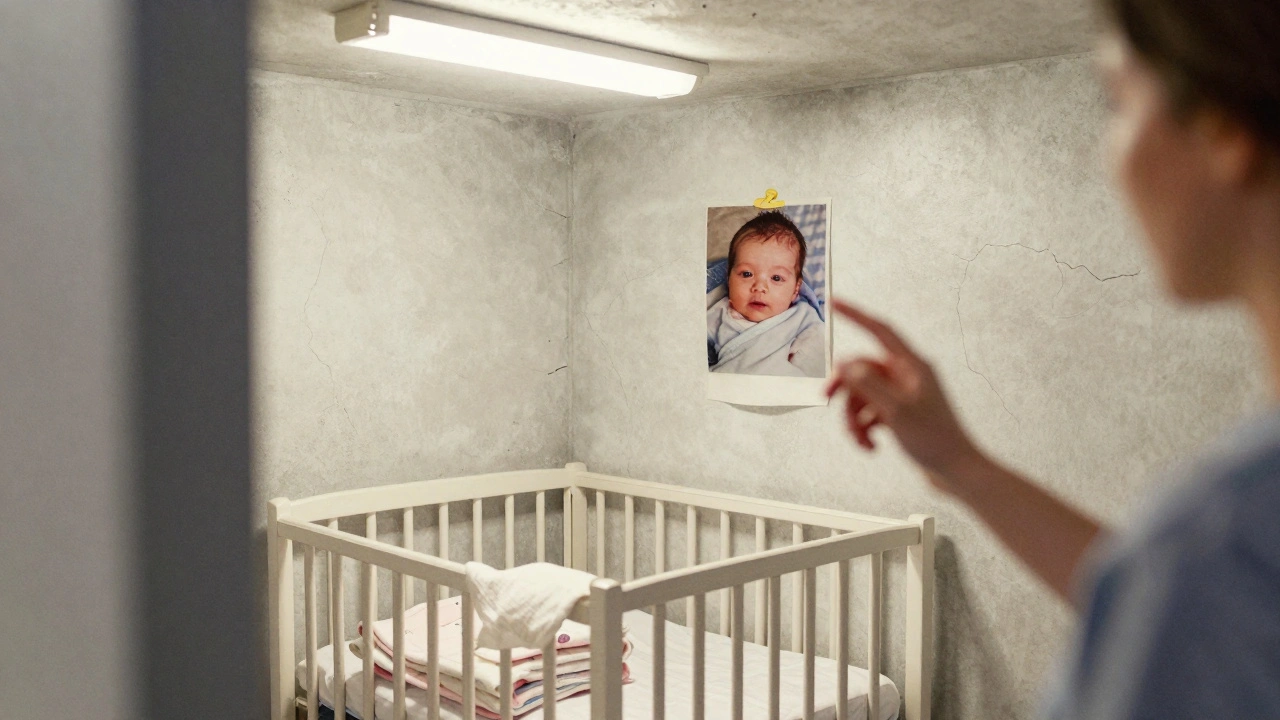
Birth, Separation, and the Aftermath
When a woman gives birth in prison, the baby usually leaves with her for a few hours or days. Then what? In 2023, about 30% of births happened while the mother remained in custody. That means she had to say goodbye to her newborn within hours. Only a handful of prisons have nursery programs where mothers can keep their babies for months. Even fewer offer parenting classes or therapy to help with bonding. Most women return to their cells with no photos, no keepsakes, and no support. The separation doesn’t just hurt emotionally-it harms development. Babies need skin-to-skin contact, feeding schedules, and consistent care. Without it, they’re more likely to develop attachment disorders. The mother is more likely to relapse into depression or substance use. And then there’s the legal fallout. If the child is placed in foster care, the mother may lose parental rights if she doesn’t complete court-mandated parenting programs. But those programs? Often not offered inside. Or they’re full. Or the woman gets transferred to another facility before she can start.What Needs to Change?
The data is clear. The gaps are wide. The human cost is real. First, stop treating pregnancy as a medical exception. It’s a normal life event. Pregnant people in custody deserve the same standard of care as anyone else. Second, eliminate copayments for maternal care. No one should be denied vitamins, ultrasounds, or blood pressure checks because they can’t pay. Third, expand access to abortion services. If abortion is legal in a state, it must be accessible behind bars. That means transportation, no financial barriers, and timely approval. Fourth, train every correctional nurse in prenatal care. Not just how to take vitals-but how to recognize preeclampsia, gestational diabetes, or signs of depression. Fifth, fund nursery programs. Keep mothers and babies together for at least six months. Provide counseling, parenting classes, and support networks. Sixth, collect data every year. The 2023 survey was a breakthrough. But it shouldn’t be a one-time event. We need annual reporting, broken down by state, facility, and outcome. This isn’t about being soft on crime. It’s about recognizing that people behind bars are still human. And when they’re pregnant, they’re not just carrying a baby-they’re carrying hope, fear, and the chance for a different future.What Happens Next?
The 2023 data is a starting point. It’s the first time we’ve had a clear picture. Now we need action. States with the worst outcomes-like those with high preterm birth rates or no mental health screening-must be held accountable. Advocacy groups are already pushing for legislation. Some states have passed laws banning shackling during labor. Others require prenatal vitamins to be provided on day one. But laws without enforcement are just words. We need oversight. We need transparency. We need to stop pretending that pregnancy behind bars is someone else’s problem. Because when a baby is born in prison, the system doesn’t end. It just begins.How common is pregnancy in U.S. prisons and jails?
Approximately 58,000 pregnant individuals are admitted to U.S. correctional facilities each year. On any given day, about 328 pregnant people are held in state prisons alone. In 2023, 2% of all female admissions tested positive for pregnancy, based on data from 47 states and the federal system.
Why is the live birth rate higher in prisons than in the general population?
In 2023, 91.5% of pregnancy outcomes in prisons ended in live birth, compared to 67% nationally. This gap exists because abortion access is severely restricted behind bars. Even in states where abortion is legal, incarcerated people often face barriers like lack of transportation, denial of requests, or being forced to pay out-of-pocket. These obstacles drastically reduce the number of abortions performed in custody.
Do incarcerated women get proper prenatal care?
Not consistently. While 96% of prisons say they schedule an appointment within two weeks of a positive pregnancy test, only about half provide actual prenatal care-like nutritional advice, exercise guidance, or medication management. A 2022 study found that 34% of incarcerated pregnant women received inadequate care, putting them at higher risk for low birthweight babies and preterm delivery.
Are mental health needs addressed for pregnant women in prison?
Very rarely. Over two-thirds of incarcerated women have a history of mental illness, and more than a third of those who gave birth while incarcerated met criteria for moderate to severe depression. Yet four state prison systems-Alabama, Iowa, Massachusetts, and Washington-do not screen for depression during pregnancy or postpartum. Mental health care is often an afterthought, even though trauma and depression are common and deeply tied to pregnancy outcomes.
What happens to the baby after birth in prison?
In most cases, the baby is separated from the mother within hours or days. Only a small number of prisons offer nursery programs that allow mothers to keep their infants for several months. Without consistent bonding, skin-to-skin contact, and feeding routines, both the infant and mother face higher risks of developmental delays and postpartum depression. Many mothers lose custody if they can’t complete parenting programs-which are often unavailable inside prison.